Why should companies in the US, Canada and Australia care about an EU directive on welding fumes?
Because the core issue is not European. It is occupational exposure.
The EU’s proposed update matters directly to companies operating in Europe. But even for manufacturers, distributors and production sites outside the EU, the underlying message is the same: welding fumes are a well-established health risk, and regulators across major industrial markets already expect employers to assess exposure and control it properly.
In the United States, OSHA requires local exhaust or general ventilation to keep toxic fumes, gases and dust below permissible levels. In Canada, CCOHS and federal guidance clearly describe welding fumes as a complex and potentially carcinogenic mixture and emphasize local exhaust ventilation close to the source. In Australia, Safe Work Australia has already moved to a significantly lower workplace exposure standard for total welding fumes, reducing it from 5 mg/m3 to 1 mg/m3 in jurisdictions that have implemented the change.
What exactly is changing in the EU?
The short version: welding fumes are being brought more explicitly into the scope of the EU’s Carcinogens, Mutagens and Reprotoxic Substances Directive, the CMRD.
On July 18, 2025, the European Commission presented its proposal for the 6th revision of the CMRD. The proposal explicitly addresses welding fumes. The Council of the European Union adopted its position on December 1, 2025, and the relevant European Parliament committee adopted its position on April 15, 2026.
As of April 29, 2026, the revision has not yet been finally adopted, but the direction is already clear. Once formally adopted, member states are expected to have two years to transpose the changes into national law.
Why is the EU making this change?
Because the health risks have been known for years, and regulators are moving toward clearer, more enforceable protection.
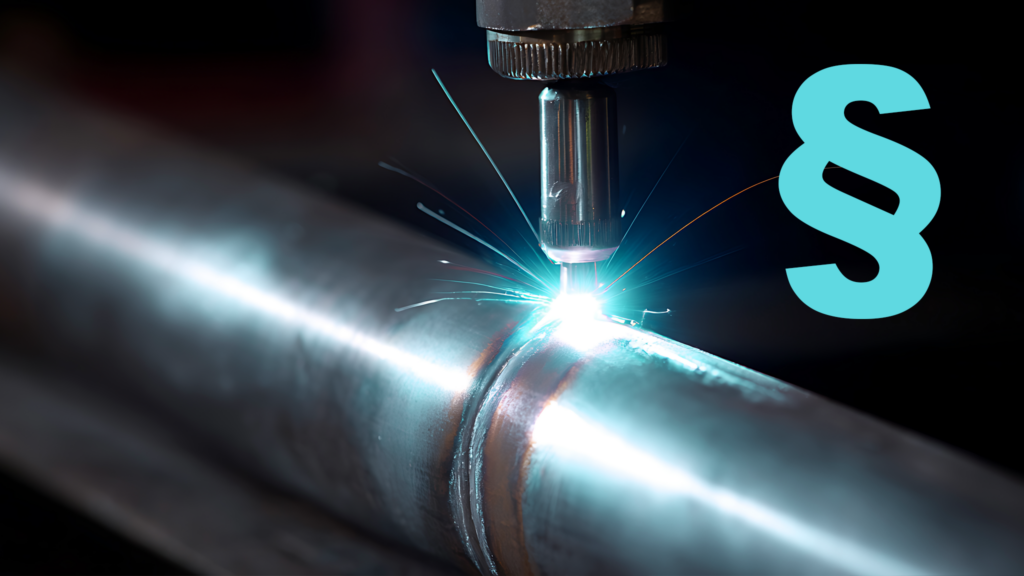
Welding fumes are not a single substance. They are a complex mixture that can include hazardous components such as chromium, nickel, cadmium and manganese, depending on the material and process. That is one reason they have long been difficult to handle consistently in practice.
The scientific and regulatory direction is clear. The UK HSE (Health, Safety and Environment) states it very plainly: all welding fume can cause lung cancer. OSHA points to hazards including lung cancer, metal fume fever and neurological concerns related to manganese exposure. Canadian guidance describes welding fumes as very fine particles, often below 1 µm, capable of reaching deep into the lungs.
How many workers are affected?
More than many companies assume.
According to the European Commission’s staff working document, around 1.2 million workers in the EU are exposed to welding fumes. About three quarters of them work in four sectors: specialized construction activities, building construction, manufacture of metal products, and motor vehicle trade and repair.
The wider context is just as important. The European Parliament states that around 120,000 workers in the EU are diagnosed with occupational cancer each year following exposure to carcinogens at work, and around 80,000 die annually from those cancers.
How many people could be better protected by the new rules?
The EU does not present that as a single headcount. Instead, it describes the expected long-term health benefit of the package.
According to the European Commission and the European Parliament, the 6th CMRD revision could prevent around 1,700 lung cancer cases and around 19,000 other diseases over a 40-year period. It is also expected to reduce healthcare costs by up to EUR 1.16 billion.
These figures refer to the overall package, not welding fumes alone. Still, welding fumes are clearly part of that protection agenda.
What does this change mean for employers in practical terms?
It means welding fume exposure will become even harder to treat as a secondary issue.
For EU employers, the upcoming change points toward stronger expectations around risk assessment, exposure reduction and technical control measures. For companies outside the EU, the practical message is very similar, because regulators in other regions already expect this kind of action.
OSHA requires ventilation to control exposure. Canadian guidance says local exhaust ventilation should be positioned close to the plume source and makes clear that respirators should not replace mechanical ventilation. Safe Work Australia says exposure standards are not a safe target in themselves and that employers must take all reasonably practicable steps to eliminate or minimize risk, not merely stay below the numerical limit.
When is the new EU rule expected to take effect?
As of April 29, 2026, the revision has not yet completed the legislative process.
The next steps include Parliament’s plenary stage and negotiations with the Council on the final legal text. Only after formal adoption will the transposition period begin.
The important point is this: the legislative process is still moving, but the compliance direction is already visible. And once adopted, EU member states are expected to have two years to implement it in national legislation.
Why should employers and workers act now instead of waiting?
Because the health risk already exists. The regulation is simply making it harder to ignore.
Risk assessments, workplace measurements, equipment upgrades and properly designed extraction solutions take time. Companies that wait for the final legal deadline may leave themselves with too little room to plan, budget and implement effective controls. The more complex the production environment, the more important early action becomes.
And there is another reason. This is not a new hazard. It is an already recognized hazard that is receiving stronger regulatory attention. Acting now is not only about compliance readiness. It is about protecting people under current operating conditions.
What happens if companies do not invest in effective fume extraction?
Then they continue to carry a health, operational and compliance risk that is increasingly difficult to justify.
Health effects linked to welding fume exposure include acute irritation, metal fume fever, asthma, chronic lung disease and an increased risk of cancer. OSHA also points to hazards from toxic metals and gases, while Canadian and Australian guidance emphasize the need to identify hazardous components, monitor exposure where necessary and control the plume before it reaches the worker’s breathing zone.
In short: not investing does not remove the risk. It simply leaves the exposure in place.
What does all of this have to do with our extraction systems?
Everything.
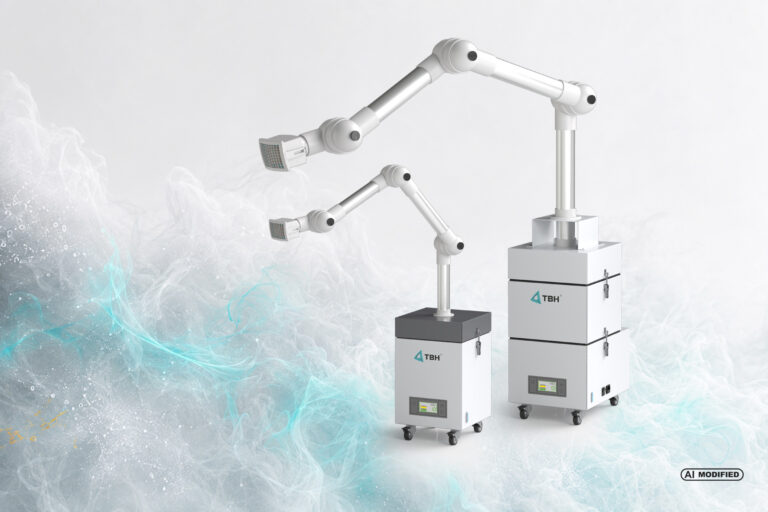
If regulators in Europe, the US, Canada and Australia all point in the same direction, the practical takeaway is straightforward: welding fumes need to be captured as close as possible to the source, filtered effectively and managed through a solution that fits the real process.
That is exactly where professional extraction and filtration systems come in.
Conclusion
The EU revision is not final yet. But the message is already clear.
Welding fumes are receiving stronger regulatory attention in Europe, and the same issue is already highly relevant in North America and Australia. The science is established. The risk is real. And the expectation is moving in one direction: assess exposure properly, control it effectively and do not treat extraction as an optional add-on.
For employers, that means now is the right time to review current welding applications and existing controls. For workers, it means better recognition of a risk that has too often been normalized. And for extraction technology, it means a more visible role in what it should always be: a core part of occupational health protection.
Sources: Europäische Kommission, 18.07.2025, Rat der EU, 01.12.2025, Europäisches Parlament, 15.04.2026, EUR-Lex, COM(2025)418, HSE: Health risks from welding, HSE: Welding fume – protect your workers, OSHA: Welding fumes, OEIL-Verfahrenszusammenfassung, OSHA Fact Sheet, EUR-Lex – 52025SC0192 – EN – EUR-Lex