When people think about extracting laser fumes, occupational safety is often the first thing that comes to mind. While this is true, in practice it doesn’t tell the whole story. That’s because laser-based processes are not just about removing emissions from the work area. They’re also about stable operations, clean machine environments, and reliable production conditions.
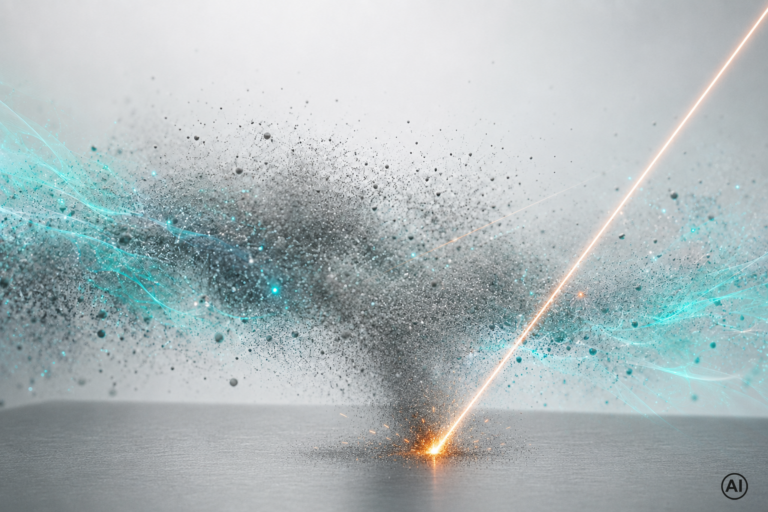
Depending on the method, material, and process control, laser cutting generates smoke, fine dust, and very small airborne particles. Some of these are so fine that they cannot be seen with the naked eye. This is precisely what makes the issue so challenging. What is invisible is quickly underestimated in everyday life.
Why extracting laser smoke is more than just occupational safety
In many companies, extraction technology is still primarily viewed as a protective measure for employees. This perspective is understandable, but it is not the whole picture. Those who wish to extract laser smoke often influence far more than just the air in the immediate work area.
Fine particles can spread throughout the environment, settle on sensitive components, and compromise overall cleanliness in the process. This can have implications for maintenance, equipment availability, and the consistency of manufacturing conditions. In short: Clean air is not just a health issue. It is also a process issue.
How small particles from laser processes can be
The issue becomes particularly relevant due to the particle sizes described in scientific studies. In a study on the cutting of 10 to 30 mm thick austenitic 304L stainless steel plates with a high-power fiber laser, a count median aerodynamic diameter of approximately 0.12 µm was measured for the resulting aerosols, or about 120 nm [1]. In the same paper, the authors also describe that the aerosol concentration decreased by nearly 30% as the cutting speed increased, depending on the conditions [1]. This clearly demonstrates that emissions from laser processes do not depend solely on the material. Process parameters also play a significant role.
Even smaller particles were observed in a study on laser-based additive manufacturing of metal components. There, the vast majority of the primary particles formed were in the range of 4 to 16 nm. The reported median values were 8.0 nm, 9.4 nm, and 11.2 nm for the processes investigated [2]. Three laser-based additive manufacturing processes using stainless steel powders were examined. These values cannot be generalized to every laser process. However, they make it clear that particles in the nanometer range can be generated in metal-based laser processes [2].
What these orders of magnitude mean in technical terms
This is precisely where context is needed. Not every small particle size automatically equates to a specific level of exposure. Nevertheless, such size ranges help to assess the issue more realistically.
According to NIOSH, particles up to roughly 100 µm are considered inhalable. Particles in the PM10 range are considered thoracic, and particles in the PM4 range are considered respirable [3]. This means: They can penetrate as far as the alveoli of the lungs. The WHO also points out that fine particles such as PM2.5 penetrate deep into the lungs and can in some cases travel further into the body [4].
This makes it clear why laser smoke extraction should not be viewed solely from the perspective of “smoke must be removed.” When studies describe aerosols of around 120 nm or primary particles in the range of 4 to 16 nm [1][2], it is clear that very fine emissions can play a role here. This is precisely why technically appropriate collection and filtration are essential.
Not every laser process generates the same emissions
Equally important is the technically sound caveat: Not every laser process generates the same emissions, and not every measured particle size can be easily applied to other applications. That would be too sweeping a generalization.
The decisive factors are always the material being processed, the specific process, the power, the process control, the airflow, and the specific design of the collection system. Laser cutting, laser marking, laser cleaning, and laser-based additive manufacturing are not the same. Even within a single process, changes in material or process parameters can influence emission behavior. This is precisely why a good solution requires not blanket promises, but a sound technical design.
What effective extraction must achieve in practice
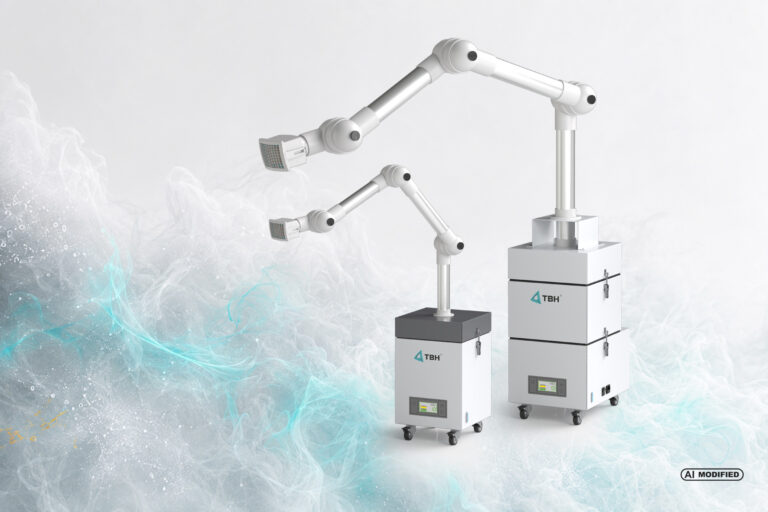
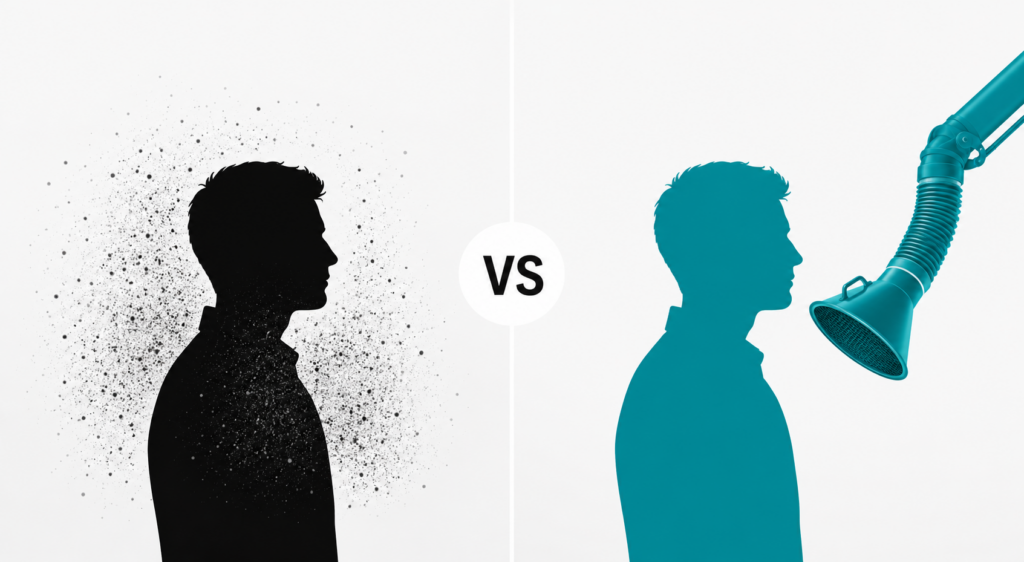
Anyone seeking to extract laser fumes needs more than just general air movement in the room. It is crucial that emissions are captured as early as possible and as close as possible to the source. The better this is achieved, the lower the likelihood that particles will spread uncontrollably into the surrounding area.
A well-designed extraction and filtration solution can help to
- reduce exposure in the work environment,
- remove fine emissions directly from the process,
- keep sensitive areas of the facility cleaner,
- reduce deposits in the surrounding area,
- lower maintenance costs,
- and support more stable conditions in production.
That sounds technical, but in practice it is very concrete. Where fewer emissions remain in the environment, operational safety often increases as well. And where processes run more cleanly, quality and availability are frequently enhanced at the same time.
Extracting laser smoke as part of stable manufacturing
Ultimately, it is not just about a single protective measure. Those who need to extract laser smoke are simultaneously determining part of the process quality. Clean air at the source can help protect people, keep machines cleaner, and make production conditions more reliable.
That is precisely where the real added value lies. Extraction is not a peripheral issue that begins only after the process. It is a technical component of a well-designed manufacturing process.
Do you want to extract laser smoke and are looking for a solution that fits your specific application?
Learn more here about our extraction solutions for laser smoke.
Sources
-
- [1] Ock et al.: Secondary emission behavior analysis and aerosol characteristics evaluation in laser cutting for safe nuclear decommissioning
- https://snu.elsevierpure.com/en/publications/secondary-emission-behavior-analysis-and-aerosol-characteristics-
- [2] Thomassen et al.: Characterization of ultrafine particles emitted during laser-based additive manufacturing of metal parts
- https://www.nature.com/articles/s41598-020-78073-z
- [3] NIOSH: Quantification of Airborne Dusts From Powders
- https://www.cdc.gov/niosh/nmam/pdf/Chapter-AD.pdf
- [4] WHO: What are the WHO Air Quality Guidelines?
- https://www.who.int/news-room/feature-stories/detail/what-are-the-who-air-quality-guidelines