
Anyone wishing to extract welding fumes and laser fumes should take a holistic view of the process. Laser cleaning and automated laser welding, in particular, generate emissions that should be captured as directly as possible at the source. (BAuA)
Anyone wishing to extract welding fumes and laser fumes must consider more than just visible smoke in the room. Automated laser welding and laser cleaning in particular generate fine to ultrafine particles as well as gaseous emissions, depending on the material and process. For welding work, TRGS 528 provides the central framework and specifies extraction at the source or point of discharge as an essential protective measure. (BAuA)
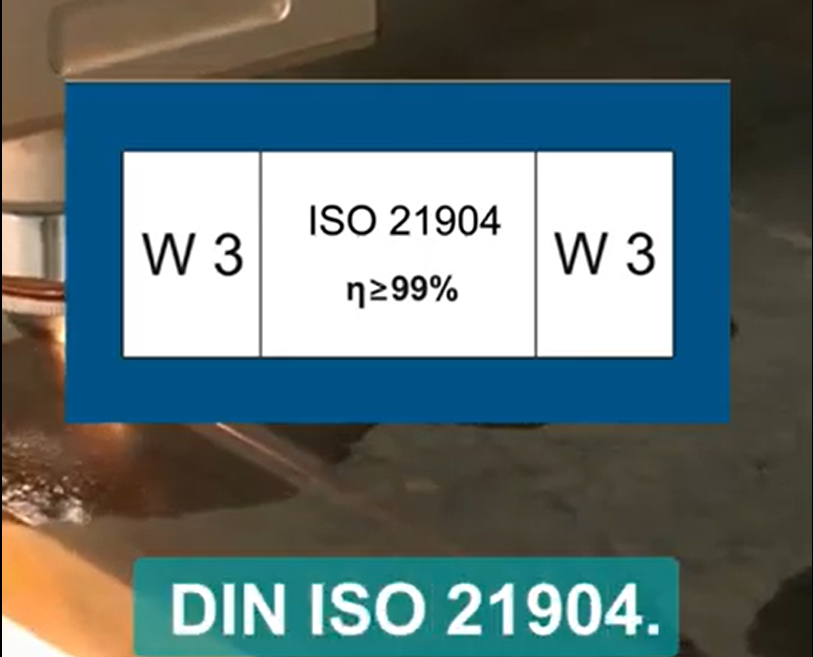
In automated laser welding, process-oriented capture is particularly important. TRGS 528 applies to welding work on metallic materials and is therefore also relevant for automated welding processes. W3-certified welding fume extraction units are tested in accordance with DIN EN ISO 21904-1/-2 (until 2020 DIN EN ISO 15012-1 / -2); the DGUV lists such devices on its approved list and links them to air recirculation. (BAuA)
Our TBH documents also clearly classify automated welding as an emission-relevant process: This generates extremely fine, sometimes carcinogenic particles that must be effectively extracted.
Laser cleaning should also be taken into account when designing the extraction system. Technical literature shows that laser cleaning can generate airborne particles down to the nanoparticle range. This means that laser cleaning is not an emission-free process, but a clear case for a thorough risk assessment and appropriate monitoring at the process. (ScienceDirect)
Our TFS Series is designed for laser marking, laser engraving, and automated welding processes. Depending on the model, SafeLine filters, H14 particulate filters, and optional activated carbon are available for these applications. This allows the filter and extraction technology to be configured for particulate and—if necessary—gaseous emissions as well. (TBH GmbH Filter and Extraction Systems)
The TFS 200 Series is W3-certified (ILK Dresden). The TFS 500-1000 Series is IFA-tested and certified with a W3 certificate. (TBH GmbH Filter and Extraction Systems)
Extracting welding fumes and laser fumes is a key issue, particularly in automated laser welding and laser cleaning. For laser welding, TRGS 528 and W3 are the decisive guidelines. In laser cleaning, it is evident that relevant particulate emissions can also arise. Those who thoroughly evaluate both processes and plan extraction directly at the source create a solid foundation for occupational safety and health. (BAuA)
Do you want to extract welding fumes and laser fumes and are looking for a solution for laser cleaning or automated laser welding? Talk to us about your application and the appropriate configuration of our TFS series. (TBH GmbH Filter and Extraction Systems)
FAQ
Does TRGS 528 also apply to automated laser welding?
Yes. TRGS 528 applies to welding work on metallic materials and is therefore also relevant for automated welding processes. (BAuA)
Is laser cleaning relevant to occupational safety?
Yes. Studies show that airborne particles down to the nanoparticle range can be generated during laser cleaning. (ScienceDirect)
Which TFS models are W3-certified?
The TFS 200 series is W3-certified (ILK Dresden). The TFS 500 is IFA-tested and also bears a W3 certificate. (TBH GmbH Filter and Extraction Systems)
Extracting welding fumes and laser fumes: Why laser cleaning and automated laser welding are particularly relevant
Anyone wishing to extract welding fumes and laser fumes must consider more than just visible smoke in the room. Automated laser welding and laser cleaning in particular generate fine to ultrafine particles as well as gaseous emissions, depending on the material and process. For welding work, TRGS 528 provides the central framework and specifies extraction at the source or point of discharge as an essential protective measure. (BAuA)
Automated laser welding: W3 and TRGS 528
In automated laser welding, process-oriented capture is particularly important. TRGS 528 applies to welding work on metallic materials and is therefore also relevant for automated welding processes. W3-certified welding fume extraction units are tested in accordance with DIN EN ISO 21904-1/-2 (until 2020 DIN EN ISO 15012-1 / -2); the DGUV lists such devices on its approved list and links them to air recirculation. (BAuA)
Our TBH documents also clearly classify automated welding as an emission-relevant process: This generates extremely fine, sometimes carcinogenic particles that must be effectively extracted.
Laser cleaning: a relevant process for risk assessment
Laser cleaning should also be taken into account when designing the extraction system. Technical literature shows that laser cleaning can generate airborne particles down to the nanoparticle range. This means that laser cleaning is not an emission-free process, but a clear case for a thorough risk assessment and appropriate monitoring at the process. (ScienceDirect)
Our TFS Series for These Applications
Our TFS Series is designed for laser marking, laser engraving, and automated welding processes. Depending on the model, SafeLine filters, H14 particulate filters, and optional activated carbon are available for these applications. This allows the filter and extraction technology to be configured for particulate and—if necessary—gaseous emissions as well. (TBH GmbH Filter and Extraction Systems)
The TFS 200 Series is W3-certified (ILK Dresden). The TFS 500-1000 Series is IFA-tested and certified with a W3 certificate. (TBH GmbH Filter and Extraction Systems)
Conclusion
Extracting welding fumes and laser fumes is a key issue, particularly in automated laser welding and laser cleaning. For laser welding, TRGS 528 and W3 are the decisive guidelines. In laser cleaning, it is evident that relevant particulate emissions can also arise. Those who thoroughly evaluate both processes and plan extraction directly at the source create a solid foundation for occupational safety and health. (BAuA)
Do you want to extract welding fumes and laser fumes and are looking for a solution for laser cleaning or automated laser welding? Talk to us about your application and the appropriate configuration of our TFS series. (TBH GmbH Filter and Extraction Systems)
FAQ
Does TRGS 528 also apply to automated laser welding?
Yes. TRGS 528 applies to welding work on metallic materials and is therefore also relevant for automated welding processes. (BAuA)
Is laser cleaning relevant to occupational safety?
Yes. Studies show that airborne particles down to the nanoparticle range can be generated during laser cleaning. (ScienceDirect)
Which TFS models are W3-certified?
The TFS 200 series is W3-certified (ILK Dresden). The TFS 500 is IFA-tested and also bears a W3 certificate. (TBH GmbH Filter and Extraction Systems)