
Why Are Modern Filtration Systems Indispensable in the Metal Industry?
Fine dust is an invisible hazard in metalworking. It poses a daily threat to the health of many skilled workers. This presents companies with significant challenges. Anyone who underestimates the danger risks harm to both human beings and machinery. A customizable filtration and extraction solution effectively reduces this risk.
Invisible Hazard: Fine Dust in Everyday Work
Grinding, cutting, or welding produces extremely fine particles. These originate from metal and other materials. The particles disperse almost weightlessly in the air. Fine dust remains invisible and is therefore particularly insidious. It penetrates deep into the respiratory tract and irritates the tissue. Ultrafine particles can pass through the alveoli. They enter the bloodstream and affect the entire body.
What Is Fine Dust, and How Large Are the Particles?
Fine dust refers to small, airborne solid or liquid particles. They are often classified based on their aerodynamic diameter:
- PM10: Particle fraction with an aerodynamic diameter of up to approximately 10 µm.
- PM2.5: Finer particle fraction up to approximately 2.5 µm.
- Ultrafine particles: Particles with a diameter of less than 0.1 µm (100 nm).
Industrial processes such as welding, grinding, or laser machining can generate particles of various sizes. In addition to particle size, the chemical composition and the actual exposure level at the workplace are also important factors in risk assessment. The PM categories are primarily used to describe fine particulate matter in ambient air. In occupational safety, the inhalable and alveolar dust fractions (E-dust and A-dust) also play an important role.
Health Effects of Fine Particulate Matter Exposure
Even small amounts can have serious consequences. Typical symptoms include coughing, shortness of breath, and inflammatory reactions. In the long term, there is a risk of chronic bronchitis, asthma, and COPD. Metals also enter the body along with the dust. These include nickel, lead, and cadmium. These substances damage the kidneys and the cardiovascular system. They increase the risk of cancer. Studies show that ultrafine dust causes systemic inflammation.
What Companies Should Do
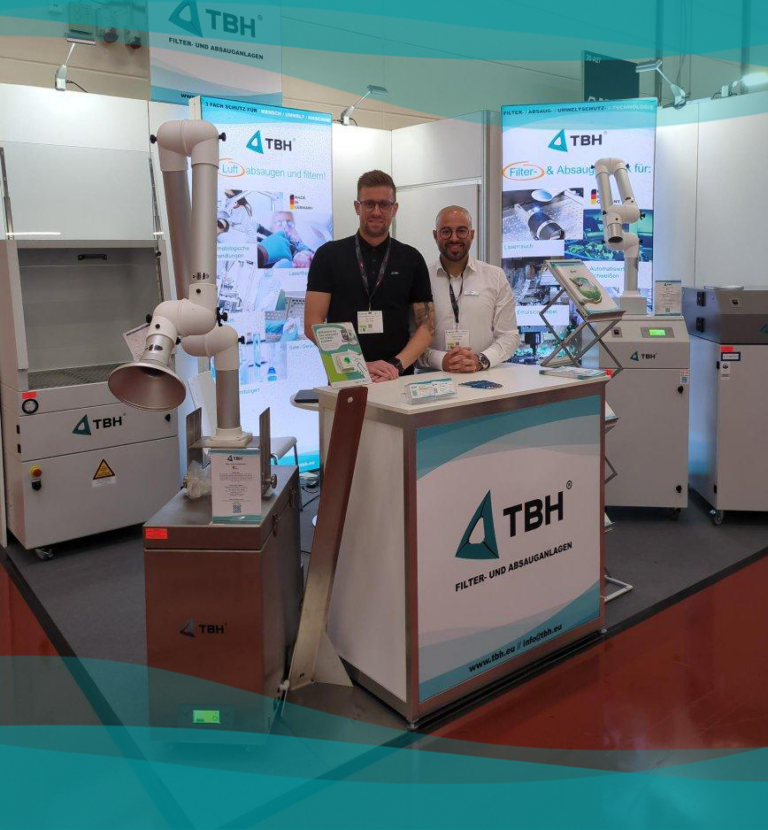
Legislation sets strict limits for particulate matter. Properly designed extraction systems capture health-hazardous particles as close as possible to the source and help reduce employees’ exposure to pollutants. They prevent disruptions and breakdowns in processes and machinery. Modular systems can be precisely tailored to any workplace. “Made in Germany” stands for quality and safety.
Emotional Security and Responsibility
Responsible employers ensure healthy air in the workplace. This builds trust and retains skilled workers. Every day free from exposure enhances performance and long-term sustainability.
Take Action Now
Protect your company against invisible risks. Learn more about modular, customizable extraction systems “Made in Germany.” Safeguard your employees and production for the long term. Contact our TBH team of experts. Discover the right filter solutions for metalworking on our website.
Sources: 4,4′-Methylenedianiline (MDA) (Revised) (86-115) | NIOSH | CDC, Healthy air, healthy work: How good air quality makes the workplace safer – Sicherheitsingenieur.NRW, Particle size is important