FMB 2026 | November 3–5, 2026 | Bad Salzuflen | TBH Booth 20-526
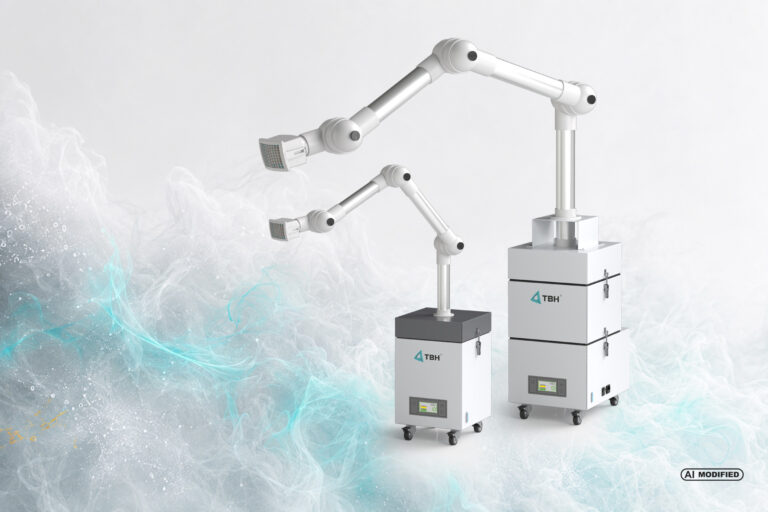
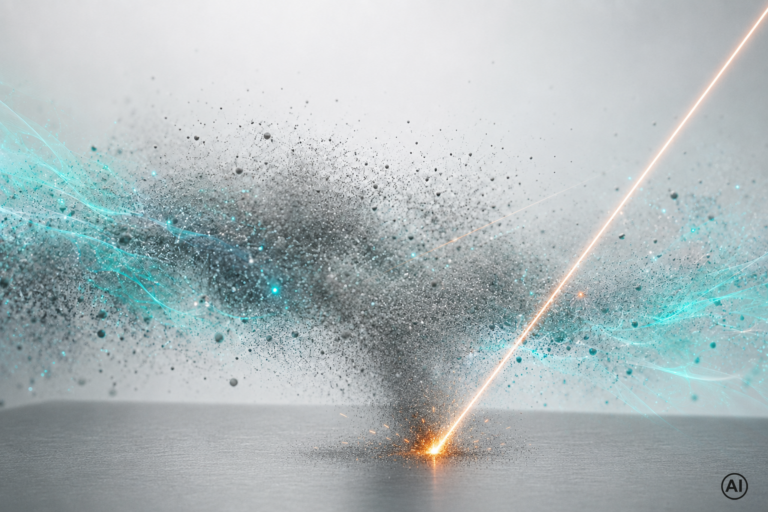
Extraction technology in mechanical engineering plays a central role in modern manufacturing facilities. Whether laser marking, laser welding, brazing, bonding, or plastics processing—numerous processes release particles, fumes, gases, or vapors. Companies should capture these emissions directly at the source before they spread into machines or production areas. At FMB 2026, TBH will demonstrate how modern filtration and extraction solutions can be optimally integrated into industrial manufacturing environments.
Extraction Technology in Mechanical Engineering Starts with Process Planning
Anyone developing machines or production lines should incorporate extraction technology in mechanical engineering into the planning from the very beginning. Capture elements, airflow, filter technology, and interfaces significantly influence the system’s future efficiency.
Every manufacturing process has different requirements. Laser applications generate different emissions than soldering processes, adhesive applications, or the machining of plastics and dry dusts. Therefore, every filtration and extraction solution should be precisely tailored to the specific process.
To learn more about why capturing emissions directly at the source is crucial, read the article “Capturing Laser Fumes Properly”.
Filtration and Exhaust Solutions for Various Applications
At FMB 2026, TBH will present modular filtration and exhaust systems for a wide range of applications in mechanical engineering. The portfolio includes solutions for laser fumes, welding fumes, particles, gases, odors, and dry dust—ranging from compact saturation filter systems to high-performance systems for automated production lines.
In addition to the appropriate filter technology, the focus is on machine integration, optimal airflow, and various operating concepts. For welding applications, the question of whether W3 air recirculation is advisable or necessary also plays an important role.
For more information on this topic, see the article “What Filters Does a Laser Fume Extraction System Need?”.
Visit TBH at FMB 2026
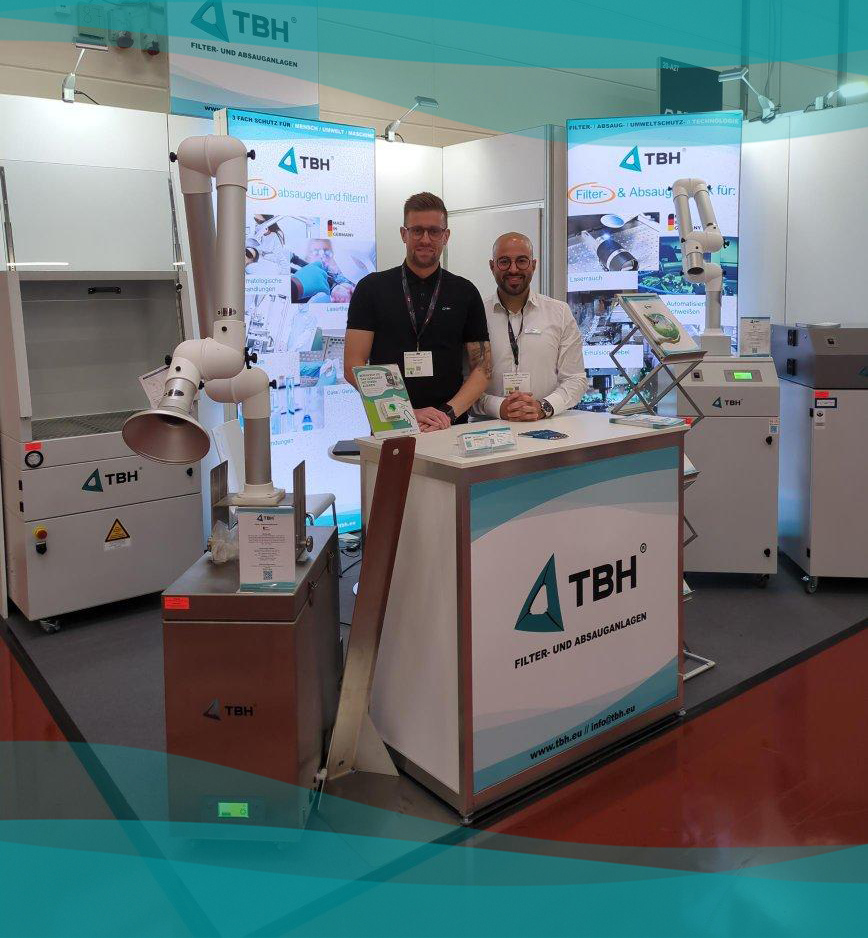
From November 3–5, 2026, the TBH team looks forward to welcoming you at FMB in Bad Salzuflen (Booth 20-526). Together, we’ll discuss your application and show you suitable solutions for extraction technology in mechanical engineering—from capture and filtration technology to integration into existing machines and production lines.
Whether you’re planning a new system or looking to optimize an existing process, we’ll help you find a solution that’s perfectly tailored to your application.
We look forward to seeing you there.
Further information:
- Blog: Properly Capturing Laser Fumes
- Blog: What Filters Does a Laser Fume Extraction System Need?
- Blog: Particle Size in Laser Fumes
- Blog: Energy-Efficient Extraction System