
What are reasons to filter air?
Clean air is a fundamental prerequisite for occupational safety, process stability, and equipment availability. In many industrial and sensitive applications, emissions are generated during machining, cutting, welding, soldering, grinding, or laser cutting—emissions that can harm employees, disrupt processes, and contaminate machinery. These include dust, smoke, aerosols, vapors, gases, and odors. It is therefore crucial not only that the air is filtered, but also where and how: as close as possible to the source, tailored to the process, material, and environment.
Why is air filtration important in industrial workplaces and sensitive applications?
In many processes, airborne contaminants enter the work area directly. Without proper capture, they can spread throughout the room and enter the breathing zone of employees. Depending on the substance, particle size, concentration, and duration of exposure, this can increase health risks while simultaneously tightening requirements for occupational safety, risk assessment, and exposure control. Air filtration therefore serves not only to protect employees but also to ensure process stability, maintain a clean work environment, and prevent deposits in equipment, enclosures, and technical components.
What pollutants are generated during laser cutting, welding, soldering, grinding, or transfer processes?
The type of emissions depends on the process and the material being processed. Welding produces fumes and particulate matter; laser cutting typically produces very fine and ultrafine particles, as well as gaseous decomposition products depending on the material. Soldering produces gaseous components in addition to particles. Grinding, dry processing, or transfer operations can release respirable and alveolar dust. In sensitive medical applications, smoke or a plume is additionally generated. Depending on the application, this may contain chemical and biological components. Therefore, the selection of a filtration and extraction solution should always be process-specific. There is no one-size-fits-all solution for all emissions.
Why is capture at the source usually more effective than general ventilation?
Contaminants should be captured wherever possible at the point of origin. This prevents them from spreading throughout the room in the first place and significantly reduces their entry into the breathing zone. It is precisely this principle that occupational safety and technical sources in Europe and the U.S. describe as a key measure for reducing exposure. Local capture at the source is therefore more effective in many applications than simply general ventilation of the room. This is especially true when emissions occur at specific points and continuously. The closer the capture system is to the source, the better the spread in the work environment can be limited.
Why are general ventilation or room air purification alone often insufficient?
General ventilation and supplementary room air measures can be useful. In many applications, however, they are only a supplement and not a substitute for source capture. The reason is simple. If a contaminant is first diluted in the room, it may have already spread throughout the work area beforehand. This is a significant difference, especially in emission-intensive processes. Local capture acts sooner and reduces exposure where it originates.
How does air filtration protect not only employees but also processes and machinery?
Filtered process air not only reduces the burden on employees. It can also help keep work areas cleaner and protect technical components from deposits. Less dust and smoke in the environment often means less cleaning effort. Enclosures, surfaces, and sensitive components can also be better protected this way. This is particularly relevant in integrated systems, in electronics manufacturing, and in sensitive production environments. There, air quality often has a direct impact on stability, cleanliness, and maintenance requirements.
What are reasons to filter air?
Invest in the future
Air filtration provides protection
The initial responses demonstrate why TBH does not view air filtration in isolation, but always takes people, the environment, and machinery into account.
Air filtration
- helps effectively capture emissions at the source,
- protect employees,
- keep work environments clean,
- and ensure stable processes.
What limits and regulations apply to air filtration in the workplace?
The specific legal situation depends on the country, the substance, and the process. Within the EU, Directive 98/24/EC on chemical agents and Directive 2004/37/EC on carcinogenic, mutagenic, or reprotoxic substances, among others, form important legal foundations. They are implemented at the national level and supplemented by country-specific requirements, guidelines, and limit values.
In the United States, depending on the substance and application, OSHA regulations, recognized engineering controls, and NIOSH recommendations apply. Specifically regarding fumes from laser or electrosurgical procedures, OSHA and NIOSH explicitly recommend local exhaust ventilation or a combination of general ventilation and local exhaust ventilation.
When is air recirculation possible, and when is exhaust air the better solution?
There is no one-size-fits-all answer to this question. Whether cleaned air can be recirculated into the room always depends on the specific application. Relevant factors include material properties, potential gas concentrations, the hazard potential, and nationally applicable requirements. The filter configuration, actual process control, and required documentation also play an important role.
In some applications, recirculation is technically and regulatory feasible. In other cases, exhaust air is the safer or mandated solution. Therefore, this decision should never be made in isolation. The risk assessment and the applicable national regulations are always decisive.
How do you find the right filter and extraction solution for your specific process?
The right solution is not determined by filter class alone. The decisive factor is the interplay of application, material, capture conditions, and operational requirements. Important questions include, for example:
- What emissions are generated?
- How fine are the particles?
- Are there additional gaseous components?
- How high must the air flow rate be?
- How can the solution be integrated into the existing process?
Added to this are requirements regarding maintenance, disposal, noise levels, and installation location. The question of whether a system should be mobile, integrated, modular, or suitable for sensitive environments is also often decisive. A modular design makes particular sense when requirements are changing or growing. This allows the solution to be better tailored to the specific process and adapted as needed.
For which applications is process-integrated air filtration particularly relevant?
Process-integrated air filtration is particularly relevant wherever emissions are generated directly within the process. This includes, for example, laser fumes, welding fumes, soldering fumes, dry dusts, transfer processes, plastics processing, as well as cleanroom and controlled environment applications.
Capturing emissions at the source also plays a crucial role in sensitive medical or aesthetic applications. In these cases, it is not only about the filtering effect, but also about airflow, integration, and suitability for the respective environment.
In the medical field, a clear classification also applies. TBH systems are not sold there as medical devices, but as accessories for extracting air directly during laser treatment on the patient, without patient contact.
Why should air filtration be incorporated early in the process planning?
The earlier air filtration is incorporated into the process planning, the better the capture, integration, and effectiveness can be tailored to the application. Then airflow, installation space, enclosure, maintenance, filter replacement, noise, and interfaces can be planned sensibly at an early stage. If extraction is only considered at the end, it often has to adapt to conditions that have already been established. This makes effective capture at the source difficult and can unnecessarily complicate later integration.
Air filtration is therefore not just a matter of occupational safety. It is also a matter of process safety and technical planning.
Key Takeaway
Air filtration is most effective when it is planned early on, tailored to the specific process, and implemented as close as possible to the source of the air pollution. In this way, it helps protect employees, keep work environments clean, and reliably support processes.
Find the right solution for your process.
Want to know which filter and extraction system is right for your application? Talk to us about your process, your emissions, and your requirements—we’ll help you choose the right solution. Simply click the link below or send us an email.
Sources:
BAuA – Federal Institute for Occupational Safety and Health (n.d.): TRGS 528 – Welding Operations. Available at: BAuA – TRGS 528. Accessed: March 19, 2026.
BAuA – Federal Institute for Occupational Safety and Health (n.d.): TRGS 900 – Occupational Exposure Limits. Available at: BAuA – TRGS 900 (PDF). Accessed: March 19, 2026.
CDC / NIOSH – Centers for Disease Control and Prevention, National Institute for Occupational Safety and Health (1996): Control of Smoke From Laser/Electric Surgical Procedures. Available at: CDC/NIOSH – Hazard Controls HC11. Accessed: March 19, 2026.
DGUV – German Social Accident Insurance (n.d.): Limit Values. Available at: DGUV – Dust Info / Limit Values. Accessed: March 19, 2026.
EUR-Lex (2024): Council Directive 2024/869 of March 13, 2024, on the protection of the health and safety of workers from the risks related to chemical agents at work. Available at: EUR-Lex – Directive 98/24/EC. Accessed: March 19, 2026.
EUR-Lex (2004): Directive 2004/37/EC of the European Parliament and of the Council of 29 April 2004 on the protection of workers from the risks related to exposure to carcinogens, mutagens, or substances toxic to reproduction at work. Consolidated version. Available at: EUR-Lex – Directive 2004/37/EC. Accessed: March 19, 2026.
HSE – Health and Safety Executive (n.d.): Local Exhaust Ventilation (LEV). Available at: HSE – LEV. Accessed: March 19, 2026.
INAIL – National Institute for Insurance against Accidents at Work (n.d.): Chemical Agents. Available at: INAIL – Chemical Agents. Accessed: March 19, 2026.
INAIL – National Institute for Insurance against Accidents at Work (n.d.): Prevention and Protection Measures. Available at: INAIL – Prevention and protection measures. Accessed: March 19, 2026.
INRS – Institut National de Recherche et de Sécurité (n.d.): Collective protection against chemical risks. Available at: INRS – Collective protection. Accessed: March 19, 2026.
INSST – National Institute for Occupational Safety and Health (n.d.): Local Exhaust Ventilation. Available at: INSST – Local Exhaust Ventilation (PDF). Accessed: March 19, 2026.
INSST – National Institute for Occupational Safety and Health (n.d.): Control of Exposure to Chemical Agents. Available at: INSST – Control of exposure to chemical agents (PDF). Accessed: March 19, 2026.
OSHA – Occupational Safety and Health Administration (n.d.): Laser/Electrosurgery Plume. Available at: OSHA – Laser/Electrosurgery Plume. Accessed: March 19, 2026.
OSHA – Occupational Safety and Health Administration (n.d.): Occupational Safety and Health Administration Technical Manual, Section III, Chapter 3: Ventilation Investigation. Available at: OSHA – Technical Manual / Ventilation. Accessed: March 19, 2026.
OSHA – European Agency for Safety and Health at Work / OSHwiki (n.d.): Use of local exhaust ventilation for reducing worker exposure. Available at: OSHwiki – Local exhaust ventilation. Accessed: March 19, 2026.
EU-OSHA – European Agency for Safety and Health at Work (n.d.): Local exhaust ventilation. Available at: EU-OSHA – Local exhaust ventilation. Accessed: March 19, 2026.
Rijksoverheid / Arboportaal (n.d.): Hazardous substances. Available at: Arboportaal – Hazardous substances. Accessed: March 19, 2026.
Rijksoverheid / Arboportaal (n.d.): Exposure measurement of hazardous substances. Available at: Arboportaal – Exposure measurement. Accessed: March 19, 2026.
Do you have further questions?
Our wide product range offers equipment for various processes and applications.
Simply call us at +49 (0) 7082/9473-0 for more information and a non-binding individual offer.
Our solutions for

Particulate matter
Particulate matter is a mixture of solid and liquid micrometer-sized particles.
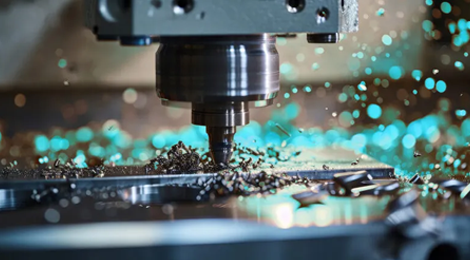
Dust & chippings
Risk assessment of dusts is based on physical and biological-toxic properties.

Gases - Odors - Vapors
Gases and vapors cause air pollution and health hazards in the workplace.
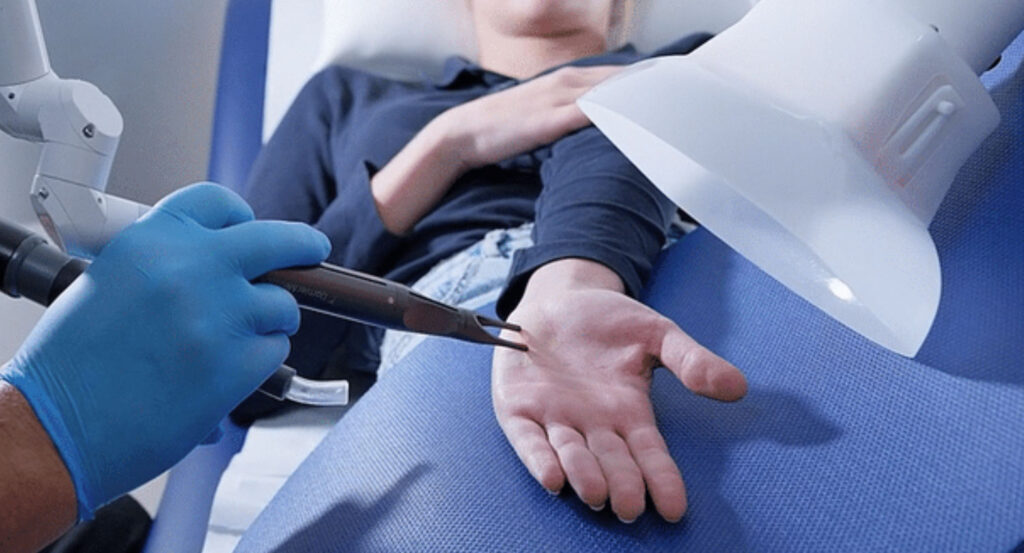
Medicine &
Aesthetics
Medical treatments with lasers produce harmful laser smoke particles.
