
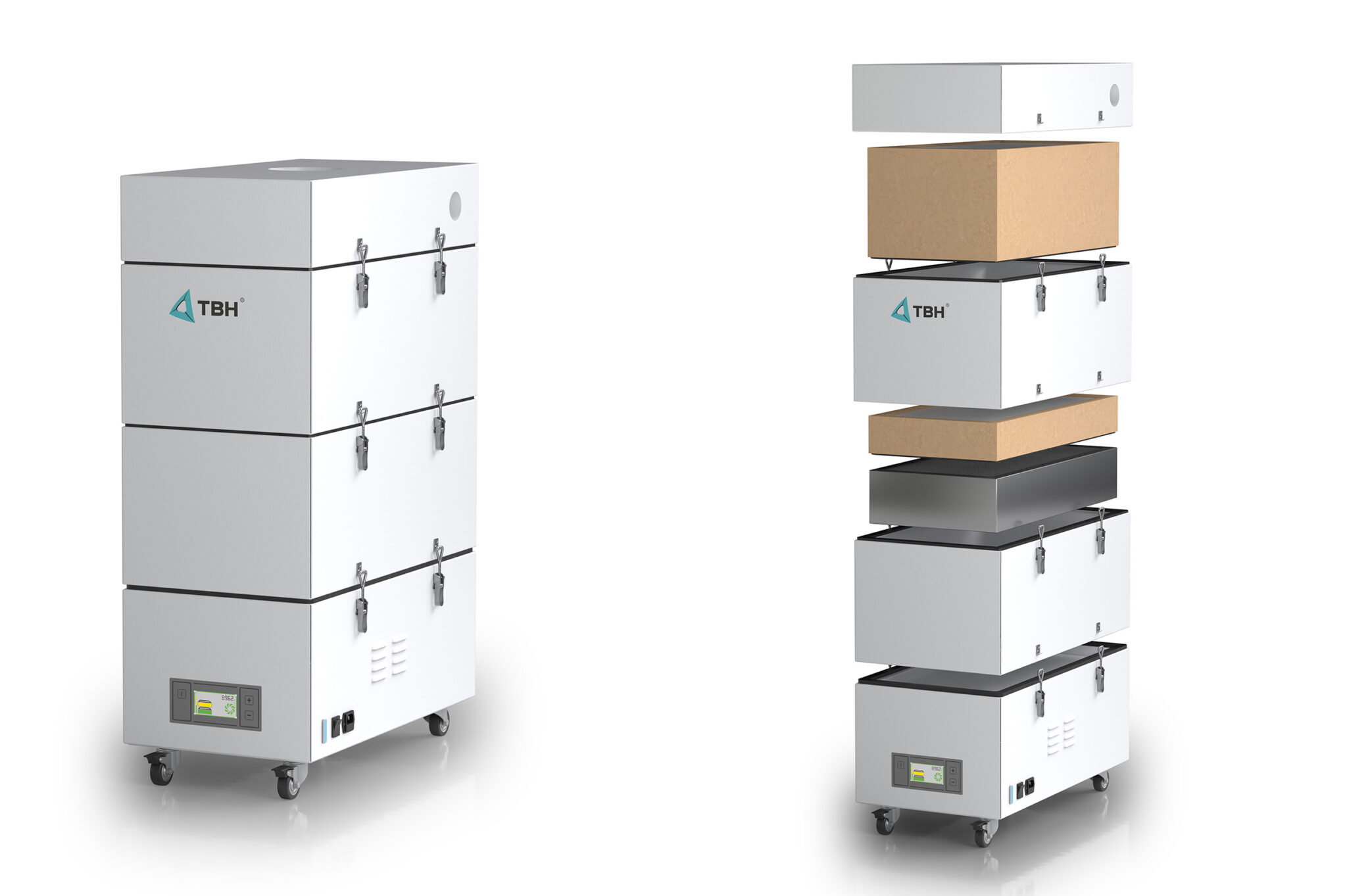
Fine dust is tiny, often invisible—and can penetrate deep into the respiratory tract. Fine dust filters (e.g., HEPA H13/H14) reliably remove ultrafine particles, toxic dusts, and aerosols from the air. This protects employees, processes, and the environment.
Fine dust: small, invisible, risky
Many industrial processes produce particles that are barely visible – but can be inhaled. The smaller the particles, the deeper they can penetrate into the respiratory tract. This is exactly where fine dust filters come into play: they remove suspended matter (particles and aerosols) from the air, thereby making a decisive contribution to cleaner process air and better occupational safety.
What exactly are fine dust filters?
Fine dust filters (also known as suspended particle filters) are highly efficient air filters that separate very small particles from the air. HEPA filters (High Efficiency Particulate Air) are particularly well known. They are used wherever maximum filtration is required – e.g., for industrial fine dust, toxic dusts, or aerosols.
Classification: ISO 16890, EN 1822 – and what that means
Standards and classes exist to clarify how good a filter is. In practice, you will mainly encounter:
1) ISO 16890 (particle sizes in ambient air)
- ISO Coarse: Retention capacity against ISO A2 dust
- ISO PM10: Particles ≤ 10 µm
- ISO PM2.5: Particles ≤ 2.5 µm
- ISO PM1: Particles ≤ 1 µm
2) EN 1822-1:2009 (Particulate filters – EPA/HEPA/ULPA)
This standard divides high-performance filters into:
- EPA (E10–E12)
- HEPA (H13–H14)
- ULPA (U15–U17)
HEPA H13/H14 in particular stand for very high separation efficiency and are therefore frequently used in demanding applications.
How do HEPA filters achieve this high level of separation?
High-quality fine dust filters consist of a dense fiber network (e.g., made of cellulose and synthetic materials) – often in many layers. Typical characteristics that are often cited for HEPA applications:
- > 1000 layers of filter medium
- Separation efficiency > 99.9% for particles in the range 0.1–0.3 µm
- Only a very small residual amount passes through the filter
Important: Performance depends not only on the filter medium, but also on the overall system (air flow, tightness, maintenance, replacement intervals).
The most common mistake: changing filters too late
As powerful as fine dust filters are, they are wear parts. When filters are saturated, air performance decreases and hygiene can suffer. In certain environments, changing filters too late can also increase the risk of undesirable microbiological contamination developing in contaminated filters.
Modern extraction systems therefore often work with filter monitoring/warning indicators that signal in good time when the filter needs to be changed (e.g., via filter saturation indicators and early warning stages).
Fine dust filters are part of a protection concept
Especially in dust-intensive work areas, filters are only one component. The following combination has proven effective:
- Dust prevention
- (where possible)
- Direct capture at the source (extraction at emission points)
- Efficient filtering (appropriate filter classes depending on the risk)
- Ventilation concept (sensible planning of supply/exhaust air)
- Personal protective equipment (as a supplement)
This creates effective protection – for employees, processes, and the environment.
Short & sweet (for those in a hurry)
- Fine dust is often invisible, but can penetrate deep into the lungs.
- HEPA H13/H14 filters ultra-fine particles particularly efficiently.
- Standards such as ISO 16890 and EN 1822 help with classification.
- Change regularly! Otherwise, performance will decline and the risk will increase.
Conclusion: Clean air is not a “nice-to-have.”
Fine dust filters are a key lever for better air quality in industry – and thus for health, process safety, and sustainable operation.
Would you like to know which filter class and extraction solution is right for your process? Contact us or take a look at our product overview at tbh.eu.
