
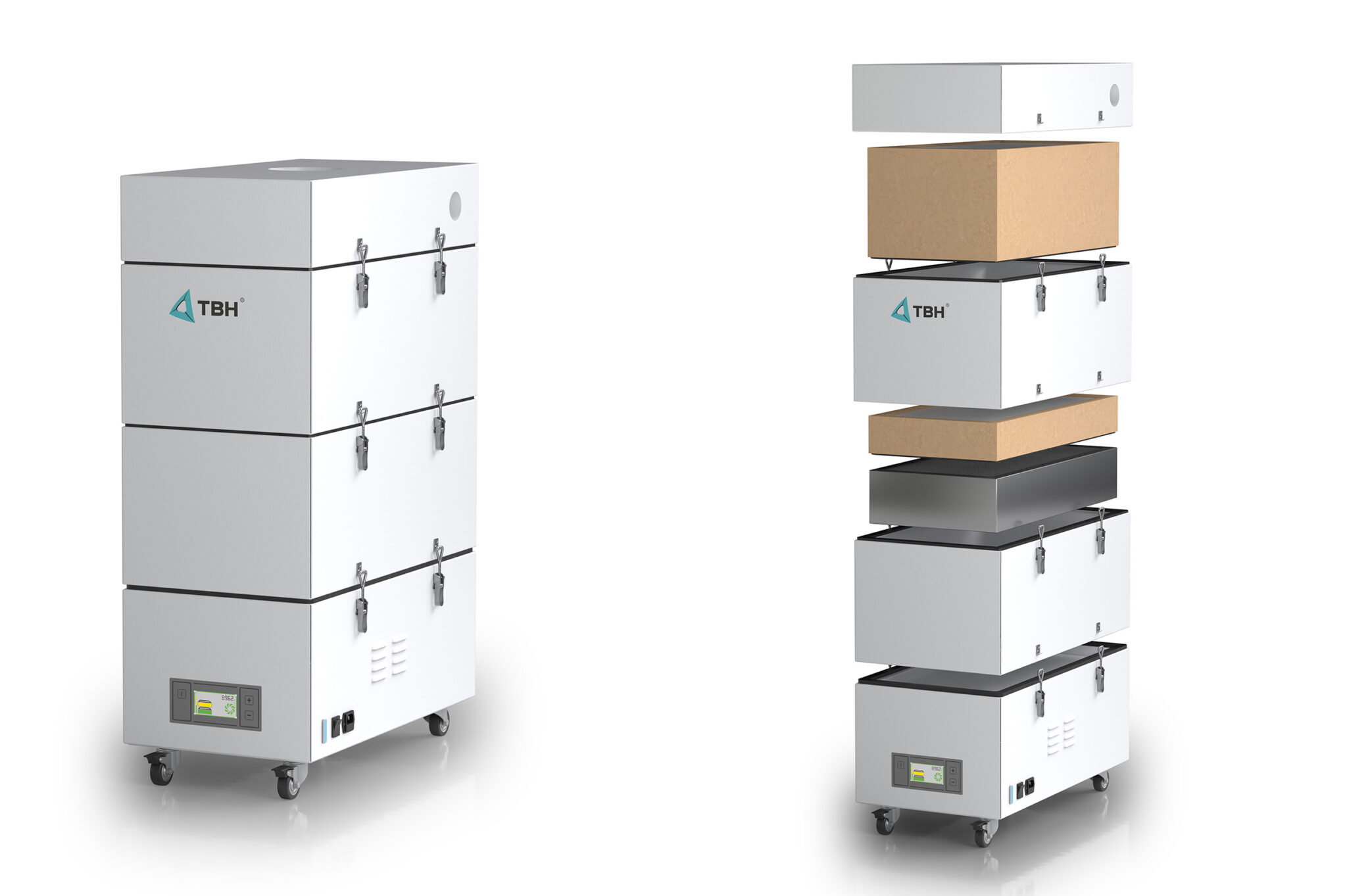
When should I change the HEPA particle filter in my TBH extraction system?
A HEPA particle filter is the heart of many extraction systems—especially where fine particles must be captured safely. But when is the right time to change it? In practice, there are two clear signals: decreasing suction power and a filter change indicator on the display. As soon as one of these occurs, the following applies: Change the filter – correctly, safely, and with documentation.
How can I tell when the HEPA filter needs to be changed?
During operation, the filter load increases – often faster than you might think, depending on the application. Typical signs are:
- The suction power noticeably decreases
- The system display indicates that the filter needs to be changed
These indications are deliberately practical: if the system signals that the filter needs to be changed, the change should be carried out promptly. This ensures that the system remains efficient and workplace protection remains reliable.
Why does the replacement interval vary?
There is no universal time frame, as the replacement interval depends heavily on usage. Among other things, the following factors are decisive:
- Material and process (e.g., dry dust, abrasive particles, mixing processes)
- Particle load (quantity and fineness of the particles)
- Duration of use (shift operation, running time per day, peak loads)
In short: The more intensive the application, the more frequently the filter must be checked and replaced.
Safe filter replacement: How to do it right
When it’s time to replace the filter, safety comes first – especially when working with hazardous substances.
1) Only with personal protective equipment (PPE)
When working with hazardous substances, the filter may only be replaced with suitable PPE. This reduces the risk of coming into contact with contaminated filter material during removal.
2) Check, replace, and safely dispose of filters
The procedure is clear:
- Check the condition of the filter
- Replace the filter properly
- Dispose of the filter safely and in accordance with the specifications
Safe disposal is essential, especially for contaminated filters – for health protection, the environment, and compliance.
3) Document filter replacement
An often underestimated step that is very useful in everyday life: documentation.
It ensures:
- Traceable maintenance (e.g., for audits/EHS)
- Plannable service intervals
- Consistently stable system performance
The result: The system is running optimally again – and you are working with reliable extraction performance.
Conclusion: The right time is when the system indicates it – or when performance declines
When the extraction performance declines or the display indicates that the filter needs to be changed, the time has come. Then it’s time to change it – safely, correctly, and with documentation. This keeps your TBH extraction system performing at its best and workplace safety at a high level.
You can find the video on changing TBH particle filters here: https://youtube.com/shorts/VfvV8NM8pK8
You can find more articles and practical knowledge about extraction technology, maintenance, and occupational safety on the TBH blog:https://www.tbh.eu/blog/
#TBH #HEPAFilter #ExtractionTechnology #HazardousSubstances #Maintenance
