
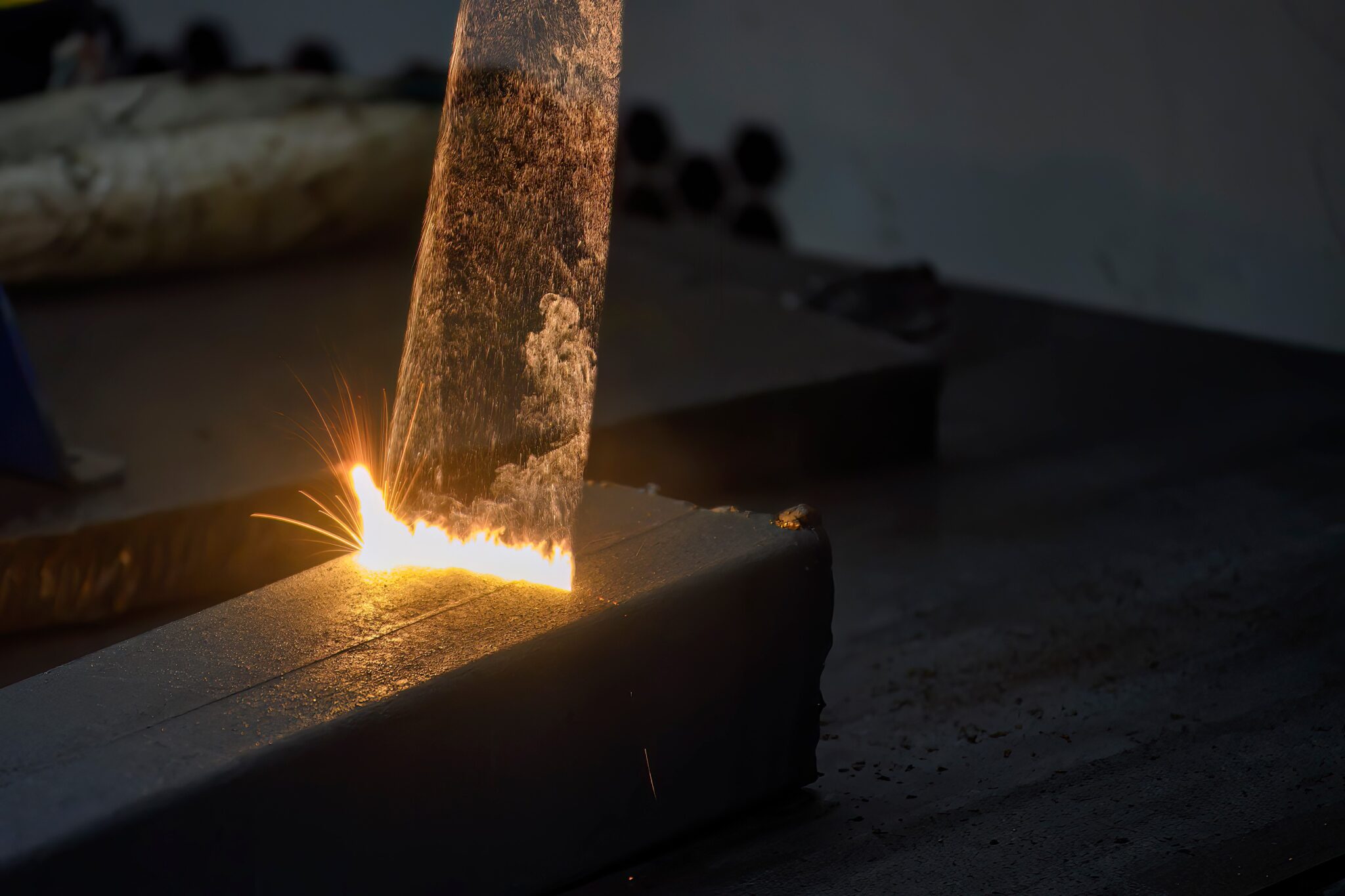
You are using Laser Cleaning – or planning to.
The process works, the results are convincing, and the technology is considered clean, efficient, and economical. Precisely for this reason, one aspect is often addressed too late: the emissions generated during the process.
No matter how established Laser Cleaning is in your company: the process is not emission-free. And this is exactly where the real challenge begins for production, EHS, and process owners.
A Clean Process – with Real Emissions
Laser Cleaning removes material thermally. What disappears from the surface does not simply vanish, but enters the surrounding air – often in the form of:
-
ultrafine particles
-
metal oxides
-
residues from coatings
-
material-specific decomposition products
In practice, it becomes clear:
Depending on material, coating, and process parameters, emissions arise that are neither visible nor clearly noticeable, yet still relevant.
What cannot be seen is often underestimated.
Why Laser Cleaning Without Extraction Becomes an Issue
Many users encounter the same situation:
The process runs smoothly, but questions arise – from EHS, occupational health, or management:
-
What are our employees actually breathing in?
-
Have the emissions been assessed?
-
Is general ventilation sufficient?
-
What happens with coated or unknown materials?
At this point, it becomes evident: without extraction, there is no solid answer.
Not because Laser Cleaning is unsafe –
but because emissions without technical capture cannot be controlled.
Occupational Safety and Responsibility: Expectations Are Clear
Regardless of the technology, one principle always applies:
Emissions must be captured directly at the source.
Laser Cleaning is no exception. Even if:
-
no chemicals are used
-
no blasting media are required
-
the process is considered modern and “clean”
As soon as fine dust, metal oxides, or process residues are generated, the following apply:
-
risk assessment requirements
-
workplace exposure limits
-
technical measures take priority over organisational ones
Without extraction, the process remains difficult to justify. With extraction, it becomes manageable.
Extraction in Laser Cleaning: Not an Add-On, but Safeguarding
In practice, extraction is often discussed only when:
-
processes are scaled up
-
multiple workstations are involved
-
EHS or management raises concerns
Time and again, the same conclusion emerges: Extraction does not only ensure clean air – it provides certainty in internal discussions.
It delivers:
-
controlled emissions
-
reproducible conditions
-
clear responsibilities
-
acceptance from EHS and management
In short: extraction makes the process defensible within the organisation.
Typical Real-World Scenarios
Many companies face similar challenges:
-
Laser Cleaning is used in mobile applications
-
materials change frequently
-
coatings are not always clearly defined
-
processes take place in existing production environments
In these cases, extraction determines whether Laser Cleaning is:
-
professionally integrated
-
or perceived as an “uncertain special process”
Conclusion: Anyone Responsible for Laser Cleaning Should Plan Extraction
There is no doubt that Laser Cleaning works.
The decisive question is how safely, sustainably, and transparently the process is implemented.
A suitable extraction solution:
-
protects employees
-
stabilises processes
-
facilitates internal approvals
-
and supports sound investment decisions
Put simply:
extraction provides the arguments needed to justify Laser Cleaning internally.
➡️ If you use Laser Cleaning and want to assess extraction properly, speak with our experts. Together, we will find the right solution for your process – technically, organisationally, and economically.
